The Tragic Tale Of Megara: From Ancient Greek Myth To Modern Icon
Megara's story is one of the most compelling yet often overlooked narratives in Greek mythology. As the first wife of the legendary hero Heracles (known to many as Hercules), Megara's life was marked by both love and tragedy, making her a fascinating figure who continues to captivate audiences today. From her royal lineage as the daughter of King Creon of Thebes to her modern portrayal in Disney's animated classic, Megara's journey reflects the complex nature of Greek mythology and its enduring influence on popular culture.
The Royal Lineage of Megara
Megara was the eldest daughter of Creon, king of Thebes, who was the brother of Jocasta and uncle of Oedipus. This royal heritage placed Megara at the center of one of Greek mythology's most complex family dynamics. If Creon is indeed the same figure referenced in various myths, Megara's mother would be his wife Eurydice, making her part of a powerful Theban dynasty. This connection to the ruling family of Thebes would later prove significant in her marriage to Heracles and the tragic events that followed.
Megara: Theban Princess and Heracles' First Wife
As a Theban woman of noble birth, Megara would become the first wife of Heracles in Greek mythology. Their marriage was not just a union of love but also a political alliance that strengthened Heracles' position in Thebes. According to myth, Heracles helped Creon defeat his enemies and, as a reward, was given Megara's hand in marriage. This union produced several children, though the exact number varies in different versions of the myth, with some accounts mentioning two sons while others speak of three or more children.
The Tragic Madness of Heracles
Perhaps the most devastating event in Megara's life was the tragic incident when Heracles, driven mad by the goddess Hera, killed her and their children. This episode represents one of the most heart-wrenching moments in Greek mythology, showcasing the destructive power of divine intervention in mortal lives. The madness that overcame Heracles was a direct result of Hera's jealousy and her attempts to thwart his heroic destiny. This tragic event would become a turning point in Heracles' life, leading to his famous Twelve Labors as penance for his actions.
Megara in Modern Popular Culture
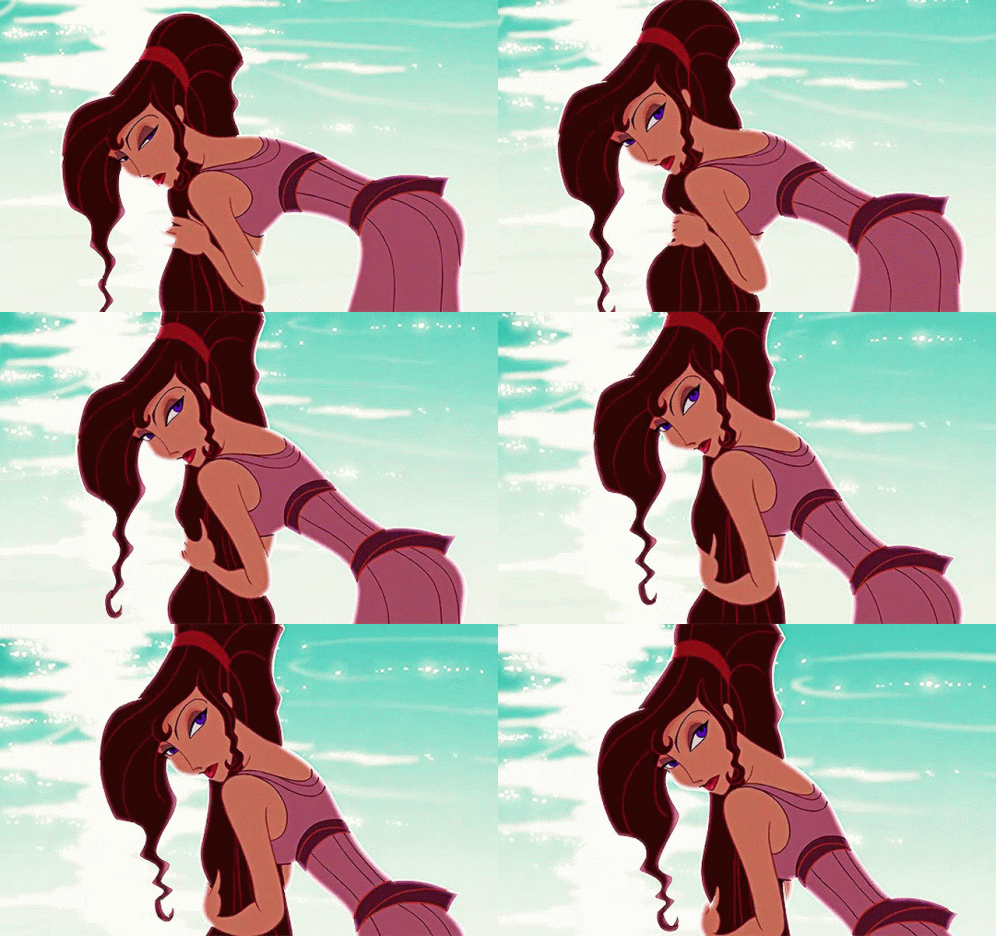
In Disney's 1997 animated feature film "Hercules," Megara (better known as Meg) emerges as the deuteragonist, bringing a fresh and modern interpretation to this ancient character. Portrayed as a snarky femme fatale, Meg once served as a reluctant minion of Hades, to whom she was indebted. This reimagining of Megara presents her as a strong, independent woman with a complex past, making her one of Disney's most intriguing female characters. Her character arc, from cynical loner to someone capable of love and sacrifice, resonates with modern audiences and adds depth to the traditional mythological narrative.
The Philosophical Legacy of Megara
Beyond her mythological significance, Megara was also the birthplace of the sophist philosopher Eucleides (c. 380 BCE), who founded the Megarian school of philosophy. This school of thought, while less well-known than those of Athens, significantly influenced Stoic philosophy and contributed to the development of logical reasoning in ancient Greece. The philosophical tradition of Megara demonstrates the city's importance not just in mythology but also in the intellectual history of the ancient world.
Megara's Role in Greek Mythology
Megara, a princess of Thebes and daughter of King Creon, became a key figure in Greek mythology through her marriage to the demigod Heracles, linking her to legendary tales and heroic deeds. Her story represents the intersection of mortal and divine realms, showcasing how the lives of even royal figures were subject to the whims of the gods. Megara's tragic fate with Hercules serves as a cautionary tale about the consequences of divine interference in human affairs and the fragility of mortal happiness.
The Symbolic Meaning of Megara
In exploring Megara's myths, her tragic fate with Hercules, and her symbolic meaning, we uncover layers of interpretation that continue to resonate in modern culture. Megara represents the innocent victim caught in the crossfire of divine conflicts, the loyal wife whose love is tested by circumstances beyond her control, and the resilient woman who survives unimaginable tragedy. Her story has been reinterpreted through various lenses, from feminist perspectives that highlight her agency to psychological analyses of her role in Heracles' journey of redemption.
Megara in Contemporary Interpretation
Today, Megara's role in Greek mythology continues to evolve as new generations discover and reinterpret her story. Modern adaptations, particularly in literature and film, have transformed her from a tragic figure into a complex character with her own agency and narrative arc. This evolution reflects changing attitudes toward female characters in mythology and popular culture, with Megara emerging as a symbol of strength, resilience, and the ability to overcome adversity.
Conclusion
The story of Megara spans millennia, from ancient Greek mythology to modern popular culture, demonstrating the enduring power of myth to captivate and inspire. Her journey from Theban princess to tragic heroine to modern icon reflects the evolving nature of storytelling and our ongoing fascination with the complexities of human experience. Whether viewed through the lens of ancient myth, philosophical inquiry, or contemporary entertainment, Megara's story continues to resonate, reminding us of the timeless themes of love, loss, redemption, and the indomitable human spirit. As we continue to explore and reinterpret these ancient tales, Megara stands as a testament to the power of myth to speak to each new generation in meaningful and relevant ways.