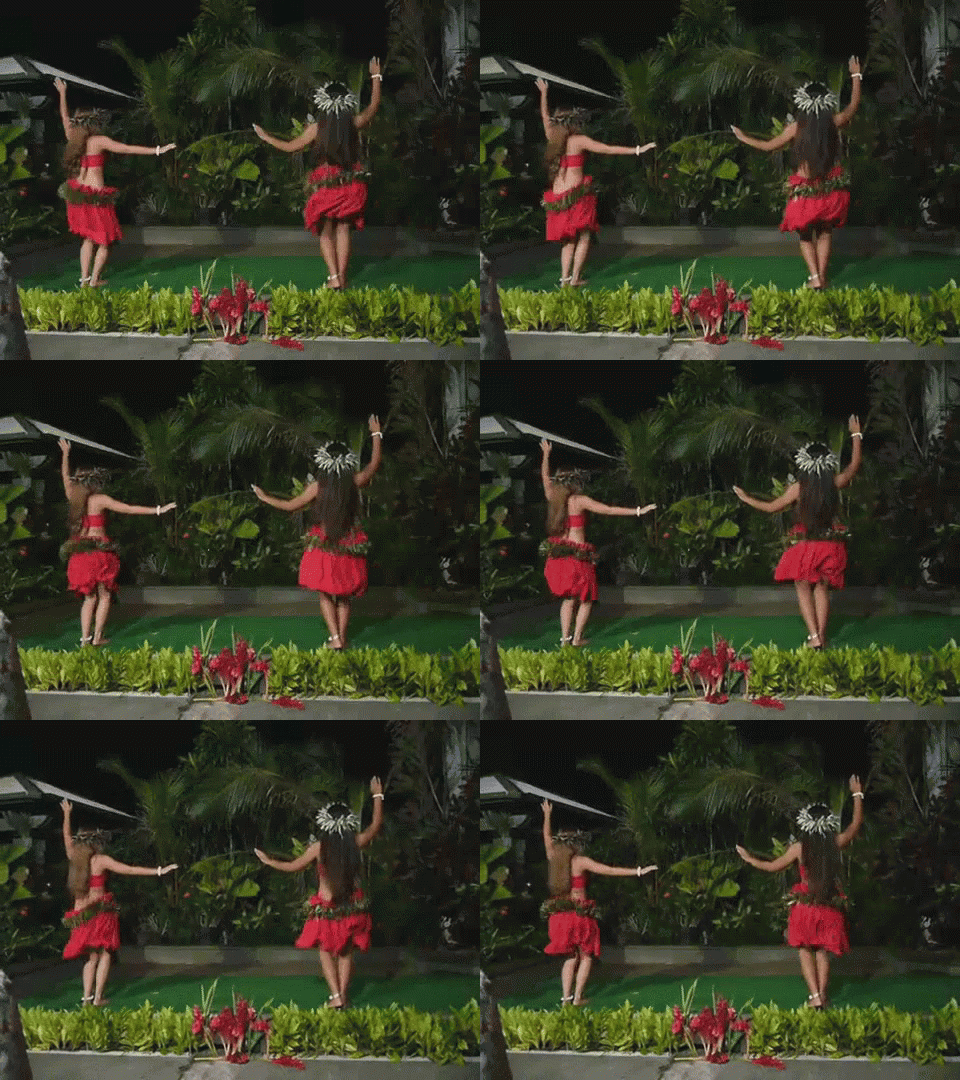
Polynesian Hips: The Cultural Significance Of Movement In The Pacific Islands
The rhythmic sway of Polynesian hips tells a story that spans thousands of miles across the vast Pacific Ocean. From the volcanic shores of Hawaii to the rolling hills of New Zealand, the distinctive movements of Polynesian dance are more than just entertainment—they're a living connection to ancient traditions, spiritual beliefs, and the very identity of island cultures that have thrived for centuries.
The term "Polynesian hips" might conjure images of hula dancers or Tahitian tamure performances, but it represents something far deeper than mere physical movement. These hip motions are embedded in the cultural DNA of Polynesia, serving as a form of communication that predates written language. When a Polynesian dancer moves their hips, they're not just performing—they're telling ancestral stories, preserving history, and maintaining a connection to the land and sea that has sustained their people for generations.
Understanding Polynesia: The Pacific's Cultural Triangle
Polynesia is one of three major cultural areas of the Pacific Ocean islands, along with Melanesia and Micronesia. This vast region encompasses over one thousand islands scattered across the eastern Pacific, forming what geographers and anthropologists recognize as the Polynesian Triangle. The term itself comes from Greek roots meaning "many islands," which perfectly describes this expansive maritime culture that has fascinated explorers and scholars for centuries.
Polynesia is generally defined as the islands within the Polynesian Triangle, with its three points anchored by Hawaii in the north, New Zealand (Aotearoa) in the southwest, and Easter Island (Rapa Nui) in the southeast. This triangular configuration creates a region that covers approximately 10 million square miles of ocean, making it one of the largest cultural areas on Earth. The islands within this triangle share common linguistic roots, cultural practices, and genetic ancestry, despite being separated by thousands of miles of open ocean.
The Polynesians, including Samoans, Tongans, Niueans, Cook Islands Māori, Tahitian Mā'ohi, and Hawaiians, share remarkable similarities in their languages, customs, and artistic expressions. These connections are particularly evident in their dance traditions, where the movement of hips plays a central role in conveying meaning and emotion. Despite the vast distances between islands, Polynesian cultures have maintained these shared elements through careful preservation of oral traditions and cultural practices.
The Geography of Polynesian Dance
Polynesia is a grouping of over one thousand islands in the Pacific Ocean, forming a triangle with Hawaii in the north, New Zealand in the southwest, and Easter Island in the southeast. These islands are scattered across the vast expanse of the Pacific, creating what many consider one of humanity's greatest achievements in navigation and settlement. The Polynesians were master seafarers who used sophisticated wayfinding techniques to traverse enormous distances, settling islands that were separated by thousands of miles of open ocean.
In fact, the name Polynesia means "many islands" in Greek, which accurately describes this archipelago of cultures and communities. These islands form a triangle with Hawaii in the north, New Zealand in the southwest, and Easter Island in the southeast. The geographic isolation of these islands led to the development of unique cultural practices, yet the shared ancestry and historical connections between Polynesian peoples have created remarkable similarities in their artistic expressions, particularly in dance and music.
Polynesia may be described as the islands within a triangle with its corners at the Hawaiian Islands, New Zealand, and Easter Island. This geographic definition helps us understand not just where Polynesian cultures are located, but also how they developed. The isolation of individual island groups within this triangle led to distinct cultural variations, while the shared ancestry and historical connections created common threads that run through all Polynesian societies. The movement of hips in dance, for instance, follows similar patterns across different island groups, though each has developed its own unique style and interpretation.
A Polynesian island group outside of this great triangle is Tuvalu, which demonstrates that Polynesian cultural influence extends beyond the strict geographic boundaries of the triangle. This highlights the importance of understanding Polynesia not just as a geographic concept, but as a cultural and linguistic family that has spread across the Pacific in various ways. The hip movements that characterize Polynesian dance can be found in various forms throughout this broader Polynesian cultural sphere.
Polynesian Nations and Territories
The list of Polynesian countries and territories under the UN geoscheme includes Samoa, Tonga, and Tuvalu, with capitals, population, and area that reflect the diverse nature of this cultural region. These nations, along with others like the Cook Islands, French Polynesia, and Niue, represent the modern political entities that have emerged from the ancient Polynesian cultural sphere. Each of these territories has developed its own unique interpretation of traditional dance forms, though the fundamental importance of hip movement remains constant.
The Polynesians are the original inhabitants of a vast string of islands in the Pacific Ocean that spans from New Zealand in the south to Hawaii in the north. This enormous geographic range encompasses a tremendous diversity of environments, from volcanic islands with lush tropical rainforests to coral atolls with minimal vegetation. The adaptation to these varied environments influenced the development of different dance styles and movement patterns, though the central importance of hip movement as a form of expression remained consistent across all Polynesian cultures.
The western boundary is Easter Island, and the Fiji Islands, though Fiji is often considered part of Melanesia rather than Polynesia. This geographic complexity reflects the interconnected nature of Pacific Island cultures, where boundaries between different cultural areas are often fluid and overlapping. The hip movements that characterize Polynesian dance share some similarities with those found in neighboring Melanesian and Micronesian cultures, though each has developed its own distinctive style and interpretation.
Cultural Significance of Hip Movement
Set within a triangle formed by Aotearoa (New Zealand) in the south, Hawaiʻi to the north and Rapa Nui (Easter Island) in the east, the Polynesian islands are dotted across the vast eastern Pacific Ocean. This geographic isolation led to the development of unique cultural practices, including distinctive forms of dance that emphasize hip movement. In Polynesian cultures, the hips are considered the center of a person's mana (spiritual power) and are therefore treated with great respect and significance in cultural performances.
Polynesia—from the Greek for many islands—is a collection of over 1,000 islands strewn over a broad region of the Pacific Ocean known as the Polynesian Triangle. The movement of hips in Polynesian dance is not merely decorative; it serves as a form of storytelling that can convey complex narratives about creation myths, historical events, and daily life. The subtle movements of the hips can indicate the rolling of ocean waves, the swaying of palm trees, or the flight of birds, making the dancer's body a living canvas that brings stories to life.
The significance of hip movement extends beyond performance into the realm of social and spiritual practice. In many Polynesian cultures, the ability to move one's hips with grace and precision is considered a mark of cultural knowledge and personal discipline. Young people often spend years learning the proper techniques for hip movement, which requires not just physical flexibility but also an understanding of the cultural context and meaning behind each motion. This training begins in childhood and continues throughout life, with mastery of hip movement being a source of pride and cultural identity.
Traditional Dance Forms and Their Evolution
Traditional Polynesian dance forms vary significantly across different island groups, though they all share a common emphasis on hip movement. In Hawaii, the hula incorporates both gentle swaying movements and more vigorous hip motions, depending on the specific style being performed. The ancient form, known as hula kahiko, features more pronounced hip movements that are closely tied to traditional chants and percussion, while the modern hula 'auana incorporates influences from Western music and dance styles.
Tahitian dance, known as 'ote'a or aparima, places even greater emphasis on rapid hip movements, with dancers performing quick, rhythmic motions that require tremendous core strength and control. The distinctive hip shaking in Tahitian dance is so integral to the form that it has become one of the most recognizable elements of Polynesian culture worldwide. These movements are not random but follow specific patterns that correspond to the drum beats and the story being told through the dance.
Samoan dance traditions, including the siva and the fa'ataupati (slap dance), incorporate hip movements that are generally more subtle than those found in Tahitian dance but equally meaningful. The Samoan approach to hip movement emphasizes grace and fluidity, with dancers using their entire body to create flowing, wave-like motions that reflect the ocean that surrounds their islands. The cultural significance of these movements is reinforced through community participation, with dance being an integral part of family gatherings, religious ceremonies, and national celebrations.
The Art of Polynesian Hip Movement
The technique of Polynesian hip movement requires years of dedicated practice and represents a sophisticated understanding of body mechanics and cultural expression. The fundamental principle involves isolating the movement of the hips from the rest of the body, allowing dancers to create complex, rhythmic patterns while maintaining control over their posture and balance. This isolation technique is particularly evident in Tahitian dance, where dancers perform rapid side-to-side and circular hip movements while keeping their upper bodies relatively still.
In Hawaiian hula, the hip movements are generally slower and more flowing, emphasizing the connection between the dancer and the natural world. The swaying of the hips in hula is meant to mimic the gentle movement of ocean waves, the swaying of palm trees in the breeze, or the undulating motion of sea creatures. This connection to nature is fundamental to Polynesian philosophy and is reflected in every aspect of their dance traditions, including the specific ways in which hips are moved and positioned.
The cultural transmission of hip movement techniques occurs through formal training as well as informal observation and participation. In traditional settings, young people would learn by watching elders and gradually being invited to participate in community dances. Today, while formal dance schools and workshops have become more common, the emphasis on learning through observation and gradual participation remains an important aspect of cultural preservation. The knowledge of proper hip movement is considered sacred in many Polynesian communities and is passed down through generations with great care and respect.
Modern Influences and Cultural Preservation
The globalization of Polynesian culture has led to both challenges and opportunities for the preservation of traditional hip movement techniques. On one hand, Polynesian dance has gained worldwide popularity, with hula schools and Tahitian dance classes found in many countries far from the Pacific Islands. This global interest has helped preserve and spread knowledge of Polynesian dance forms, ensuring that these cultural traditions continue to thrive even as the world becomes more interconnected.
However, this global popularity has also led to concerns about cultural appropriation and the dilution of traditional practices. Some worry that the emphasis on entertainment value in commercial performances may lead to a loss of the deeper cultural and spiritual meanings behind hip movements. To address these concerns, many Polynesian cultural practitioners emphasize the importance of proper training and cultural context when teaching these dance forms to non-Polynesian students.
Modern technology has also played a role in preserving and sharing knowledge about Polynesian hip movement. Video documentation, online tutorials, and social media platforms have made it easier for people around the world to learn about and appreciate these dance forms. However, many practitioners argue that true mastery of Polynesian hip movement requires in-person instruction and immersion in the cultural context, something that cannot be fully captured through digital media.
Health and Physical Benefits
The practice of Polynesian hip movement offers numerous physical health benefits beyond its cultural significance. The core strength required for proper hip isolation and control provides an excellent workout for abdominal muscles, lower back, and hip flexors. The repetitive, rhythmic nature of many Polynesian dance movements also provides cardiovascular exercise and can improve flexibility, balance, and coordination. Many fitness enthusiasts have discovered that Polynesian dance forms offer a fun and engaging alternative to traditional exercise routines.
The emphasis on proper posture and body alignment in Polynesian dance also contributes to overall physical health. Dancers learn to maintain a strong, upright posture while performing complex hip movements, which can help prevent back pain and improve overall body awareness. The controlled, fluid movements required in Polynesian dance can also help improve joint mobility and reduce the risk of injury in daily activities.
Beyond the physical benefits, the practice of Polynesian dance and hip movement can also contribute to mental and emotional well-being. The meditative quality of many dance movements, combined with the cultural and spiritual significance attached to these practices, can provide a sense of connection and purpose. For many practitioners, the act of moving their hips in traditional Polynesian patterns becomes a form of moving meditation that promotes relaxation and stress relief.
Conclusion
The story of Polynesian hips is ultimately a story of cultural resilience, artistic expression, and human connection. From the ancient navigators who first settled the islands of the Polynesian Triangle to the modern dancers who continue to preserve and evolve these traditions, the movement of hips has served as a powerful medium for storytelling, spiritual practice, and cultural identity. The distinctive hip movements that characterize Polynesian dance are not merely physical techniques but are deeply embedded in the cultural fabric of island communities.
As we look to the future, the challenge and opportunity lie in preserving the authenticity and cultural significance of Polynesian hip movement while allowing for natural evolution and adaptation. The global interest in Polynesian dance provides both the motivation and the means to ensure these traditions continue to thrive, but it also requires careful attention to cultural context and proper training. By understanding and respecting the deep cultural significance of hip movement in Polynesian traditions, we can help ensure that these beautiful and meaningful art forms continue to enrich human culture for generations to come.
The next time you witness Polynesian dance, whether in person or through media, take a moment to appreciate not just the physical beauty of the movements but the centuries of cultural knowledge, spiritual significance, and human creativity that they represent. The swaying of Polynesian hips is more than just dance—it's a living connection to the past, a celebration of the present, and a promise for the future of one of humanity's most remarkable cultural achievements.